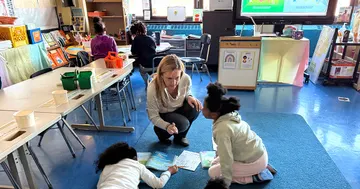
NPR follows families experiencing lower costs alongside long waits for childcare. Proposed copayments for some higher-income households involve rulemaking and notice; they should not be described as already being charged on 16 November.
Why read: Distinguishing eligibility, available places and the timing of fee rules helps readers assess whether a public service is accessible in practice.
A student-success adviser at a UK university reflects on a belonging survey: 16 of 234 invited students responded, approximately 6.84%. Rather than describing the 218 non-respondents as alienated, the author raises possible explanations such as work, caring responsibilities, commuting or mistrust that would need interviews to investigate, and argues for sustained conversations alongside questionnaires.
Why read: The reflection encourages student-support teams to address non-response bias and design interviews or diary methods that can hear from students who remain silent.
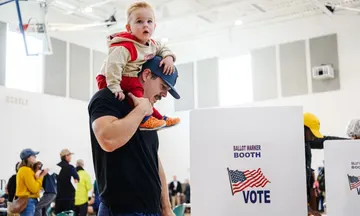
The 74 reviews votes on dedicated early-childhood funding: as of 6 November, nine of 12 measures had passed, one had failed and two remained undecided. An update on 10 November still noted that some ballots had not been counted. Voter support does not mean funding has been disbursed, still less that children's learning has improved.
Why read: Distinguishing support for fundraising, actual allocations and service improvements makes it possible to follow whether stable funding changes access to early-childhood provision.
K-12 Dive examines US school civil-rights data for the 2023–24 school year: Black boys represented 7% of K–12 enrolment but 18% of pupils receiving in-school suspensions. Pupils receiving disability-related services were also overrepresented in some disciplinary statistics. The report also covers restraint, seclusion and course availability. Its English-learner subheading says 'increase', while the body gives a change from 12% to 11%; no trend conclusion is adopted on this point.
Why read: The report invites readers to compare a group's share of enrolment with its share of a particular disciplinary measure, while distinguishing the survey year, publication date and statistical definitions.
Chalkbeat reports from New York's Path programme: 35 inclusive classrooms, staffed by two teachers with specialist support, are expected to cost about $14 million this year. The reporting illustrates classroom arrangements that offer an alternative to punishment. The programme remains small and comparative research is ongoing, so it cannot yet be said to have improved graduation rates.
Why read: Considering staffing, costs and evidence of effects together helps readers assess the conditions needed to adapt the approach locally.
FE Week follows a funding-claims investigation into a former apprenticeship provider. The government's two-page findings confirm that employment status could not be evidenced for the full duration of some apprenticeships, identify examples of non-compliant off-the-job training records, and say that some English and maths qualifications already obtained at other providers were claimed again. The department identified £198,920.10 in overpayments and is taking recovery steps; the provider says it has changed its procedures.
Why read: The investigation grounds discussion of training quality in employment checks, training records and eligibility for funding, without generalising one provider's breaches to the entire system.
An original Science and Technology Daily report describes different forms of model credits or accounts offered to staff and students at universities including the University of Science and Technology of China, Beijing University of Posts and Telecommunications and Tongji University. Researchers interviewed discuss teaching-task design, teacher checking and resource gaps between institutions. The report presents provision at several universities and expert views, but does not compare whether credits improve learning outcomes or verify the duration of allocations, actual usage rates or costs at each institution.
Why read: The report moves discussion of campus AI beyond tool availability to resource provision, instructional design and conditions for equity. It offers a basis for following how universities turn accounts and usage credits into course support.
A new UNESCO and UNICEF report says 53% of Afghanistan's primary-school-age children are outside formal general education and describes restrictions on girls' education and problems with learning quality. The material checked so far is the agencies' press release; the underlying survey methods still need to be checked against the full report.
Why read: A major new report addressing both access to education and learning quality.
Tuesday · 1 items
Government Portal of the Ministry of Education of the People's Republic of ChinaFeatured
The two ministries set a 2026 target of recruiting 6,000 retired teachers for compulsory education schools in less-developed county, township, and rural areas. This is a recruitment target; actual placements, retention, and teaching outcomes still need separate verification.
Why read: A concrete resource-allocation measure addressing the uneven distribution of teachers.
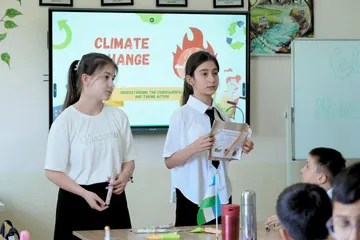
In an analysis published in September 2026, UNICEF estimated that climate disasters disrupted the education of more than 171 million students worldwide in 2025. This is a retrospective estimate, not a count of disruptions that have already occurred in 2026; the numbers affected by different disasters cannot simply be added together.
Why read: Climate risk is an important global issue for continuity of education.
An EEF-commissioned analysis of more than 1,200 Pupil Premium strategy statements from schools in England found that 91% mentioned literacy and English issues and 83% mentioned attendance. It reflects challenges identified by schools in their documents; it is not an independent measure of students' skills or absences.
Why read: Shows how schools define problems and reminds readers to distinguish self-reports from outcomes.
Monday · 1 items
Government Portal of the Ministry of Education of the People's Republic of ChinaFeatured
Seven departments issued a 2026–2030 action plan for special education, setting goals including keeping compulsory-education enrollment for school-age children with disabilities above 97%, and arranging support across schools, classes, and departments. The target is not newly observed data showing that the goal has already been achieved.
Why read: A specific national policy concerning educational access and inclusive education.
Flip Education reported teacher vacancies in public primary and junior high schools in Taiwan ahead of the 2026–27 school year (the 115th academic year in the local calendar). Citing Ministry of Education statistics as of August 25, it said there were still 614 substitute-teacher vacancies in public junior high and elementary schools. It also reported that Taipei's Jinhua Junior High School had seven vacancies during the summer and still had not filled them after 18 rounds of substitute-teacher recruitment. The article also interviewed teachers' unions and principals about assigning excess teaching hours, staff turnover, and retention. The statistics are from before the school year began; individual school cases and interviewees' views do not represent every school in Taiwan, nor do they establish the final scale of vacancies during the term.
Why read: The article connects teacher vacancies, temporary substitutes, and excess teaching hours for current staff to classroom continuity, and reminds parents to pay attention to whether teachers can remain in post. It presents both official teacher-preparation rates and teachers' organizations' observations from the field, which warrant follow-up checks on recruitment and changes in teaching assignments during the term.
The Economic Policy Institute used Bureau of Labor Statistics data to estimate that in 2025, weekly wages for U.S. public school teachers were 25.2% below those of comparable college graduates. After employer-paid benefits are included, the estimated total compensation gap was 14.5%. These are adjusted differences between occupational groups; they do not show the causal gain an individual would receive by changing careers.
Why read: A closer look at an older report’s methods: how wage, benefit and geographic definitions shape discussion of the teacher workforce. The estimates can be compared with recruitment and retention data.
Monday · 1 items
Ministry of Education of the People’s Republic of ChinaFeatured
The plan brings changes in the school-age population, the allocation of teachers and funding, and education digitalization into a five-year framework. Its release sets strategic priorities and policy instruments; it does not mean that local measures have already been implemented. Local implementation will need to be followed to assess specific school places and investment.
Why read: An overarching framework for allocating resources across education stages, with a clear hierarchy relative to later, more specific policies.
The paper constructs an index with five dimensions and reports a 2024 assessment based on 10,651 household-survey responses across 31 provincial-level regions. This is an evaluation framework proposed by the authors; scores and regional clusters depend on the indicators, weights and sampling design and should not be treated as an official ranking.
Why read: Adds to discussion of education assessment beyond a single examination score.
 Illustration