Skip to content
Interface language
Education Frontier / EDITOR'S READINGBrowse tools and guides →

Understand education's changing landscape with evidence in view.

Follow education policy, technology and learning research in China and internationally. Read what happened, then examine the evidence, limitations and conditions for practice.

This issue's reading guide

Read the full guide and sources →

English translation

The four reading threads use reports published on 14–15 November: one from China and three international, selected for editorial value rather than a fixed quota. A separate check of a university misconduct notice dated 13 November is available in the feed and is not counted as newly published within 48 hours. Interviews, classroom cases, policy aims and evidence of effects remain distinct. This is not a complete survey of global education events. AI assists preparation; an education specialist has not reviewed each claim.

  1. 01

    Universal childcare: eligibility, places and fee timing

    One year into universal childcare, NPR finds lower costs for some families alongside waits for places. Copayments for some higher-income households remain a rulemaking and implementation question, not proof that charges have begun. Interviews do not establish child-development effects. Eligibility, capacity and commencement dates need separate scrutiny.

  2. 02

    Special-education teachers: longitudinal voices and sample limits

    NPR explains a school-year project following about a dozen special-education teachers through voice memos and planned classroom visits. Recruitment, privacy and permissions shape what can be observed. The voluntary sample can illuminate working conditions but cannot estimate burnout rates or demonstrate program effects.

  3. 03

    Climate teaching: knowledge, communication and career exploration

    A Vassar climate course combines sector-specific solutions, guest speakers and public communication assignments. The report shows how one philosophy professor structures interdisciplinary teaching, while the claim that students feel more energized is the instructor’s observation, not an independently measured outcome. A useful course-design example, not proof of effectiveness.

  4. 04

    Snow breaks: check year groups, dates and care

    Local snow breaks differ in covered year groups, staggered dates and supervised care. Zhangjiakou excludes some exam years; Altay provides for free school-based care. The 14 November roundup includes earlier policies, not a new national holiday. Actual places, hours and implementation still need checking.

  1. The Paper
    ChinaUpdate
    Topic illustration of a teacher and students discussing books and ideasIllustration

    Snow breaks are not uniform: check year groups, staggered dates and supervised care separately

    A 14 November media roundup compares local snow breaks. Zhangjiakou staggers dates by school stage and excludes some exam years; Altay provides for free supervised care at school. These are local arrangements, and the roundup date is not each policy’s original publication date.

    Why read: Look beyond the number of days to which pupils are covered, who provides care and whether promised support meets families’ practical needs.


  2. The Hechinger Report
    InternationalUpdate
    Topic illustration of a teacher and students discussing books and ideasIllustration

    How one climate course connects knowledge, public communication and career exploration

    Hechinger interviews a Vassar instructor about an interdisciplinary course taught since 2021. The new material is reporting on its design and learning goals, not a new launch or an effectiveness trial.

    Why read: A concrete course design for educators to examine, while keeping the instructor’s observations distinct from independently measured learning outcomes.

  3. NPR
    InternationalUpdate
    Topic illustration of a teacher and students discussing books and ideasIllustration

    NPR follows about a dozen special-education teachers: an ongoing school-year reporting project

    NPR explains an ongoing school-year reporting project in which about a dozen teachers share voice memos. Classroom visits involve privacy and permission. These are longitudinal accounts, not a representative survey.

    Why read: The project follows teachers’ working conditions while making its reporting method visible, inviting comparison with formal requirements and systematic data.

  4. NPR
    InternationalUpdate
    Topic illustration of a teacher and students discussing books and ideasIllustration

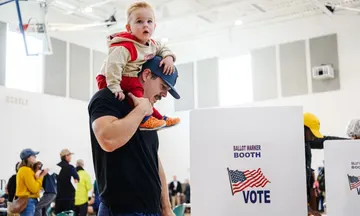
    One year of universal childcare in New Mexico: places and proposed copayments are separate questions

    NPR follows families experiencing lower costs alongside long waits for childcare. Proposed copayments for some higher-income households involve rulemaking and notice; they should not be described as already being charged on 16 November.

    Why read: Distinguishing eligibility, available places and the timing of fee rules helps readers assess whether a public service is accessible in practice.

  1. The Paper
    ChinaUpdate
    Topic illustration of a teacher and students discussing books and ideasIllustration

    After Jiangsu's new autumn-break rules, how can we tell whether pupils' workload actually falls?

    The Paper reported on 13 November that Jiangsu's education authorities had set boundaries for examinations, extra lessons and homework around spring and autumn breaks. Issuing the rules is a clear change; whether the breaks genuinely reduce pupils' workload still requires follow-up. This commentary focuses on school arrangements, family time and childcare provision, rather than treating a policy objective as an achieved result.

    Why read: Examining implementation and families' experiences through a specific rule offers teachers, parents and researchers more than a list of policy slogans.

  1. The Paper
    ChinaUpdate
    Topic illustration of a teacher and students discussing books and ideasIllustration

    After a university misconduct ruling: what is established, and what remains unanswered?

    A follow-up check of the university’s 13 November notice: it establishes the institution’s stated finding and disciplinary decision. Requesting revocation of a teaching qualification is not confirmation of revocation or a judicial determination.

    Why read: Separating completed decisions, a requested administrative step and undisclosed safeguarding arrangements makes subsequent accountability easier to follow.

  2. Chalkbeat
    InternationalUpdate
    Source image: New York schools still frequently call 911 during student crises: the gap between rules and supportSource

    New York schools still frequently call 911 during student crises: the gap between rules and support

    Citing New York City data, Chalkbeat reports that schools make more than 2,000 calls to 911 each year over students' emotional crises, and that calls involving children under 10 have exceeded 5,000 in total since 2016. The report uses a first-grader's experience to examine gaps in implementation and support, while also documenting the school's incident report and the education department's response.

    Why read: Citywide call trends, the rules and an individual case provide complementary layers of evidence for readers concerned with school crisis responses and special-education support. The different parties' accounts and the limits of second-hand reporting of the data must remain explicit.

  1. China Newsweek
    ChinaUpdate
    Topic illustration of a school counselor listening to a studentIllustration

    The Renhuai primary-school disciplinary incident: separating the family's account from preliminary official verification

    China Newsweek reported on 12 November that authorities in Renhuai, Guizhou, had intervened in an incident involving a primary-school teacher's disciplinary actions and said the teacher had been suspended pending investigation. The family's account, preliminary official confirmation and any subsequent investigative conclusions should be presented separately. This commentary preserves the status at the time of reporting and does not supply an outcome that has not been obtained.

    Why read: A school incident involving journalistic verification and an official response tests whether the website distinguishes accounts, preliminary checks and final conclusions, rather than reproducing an emotive headline.

  2. The Paper
    ChinaUpdate
    Topic illustration of a teacher and students discussing books and ideasIllustration

    Hunan universities revise rules on changing majors: how can reforms deliver fairness and a better fit?

    The Paper reports on progress with university inspection-related reforms published by Sanxiang Fengji, the website of Hunan's discipline inspection and supervisory authorities. Hunan University of Technology and Business revised its major-transfer rules and added follow-up support. Hunan University of Technology introduced special assessments for transfers from programmes with lower admission scores to those with higher scores. Huaihua University established a three-month trial period, during which four students applied to return to their original majors. Hengyang Normal University revised eligibility conditions and added skills assessments for some programmes. These are schools' own accounts of their reforms; they do not establish that fairness concerns have been resolved or that the rules' effects have been independently evaluated.

    Why read: Eligibility, assessments of suitability for a major, trial periods and subsequent academic support directly affect students' opportunities and the costs of changing programmes. Further checks could compare formal university rules, implementation data and student appeals.

  3. China Science Daily / ScienceNet
    ChinaCommentary
    Topic illustration of education researchers examining charts and notesIllustration

    How should universities assess the investment in teaching competitions? A researcher raises questions

    Writing in China Science Daily, Lu Xiaodong, a researcher at Peking University's Graduate School of Education, questions the relationship between preparation for teaching competitions, performative teaching and real classrooms. He cites preparation time, externally hired support and expert assessments from a post-competition survey of vocational institutions' teaching-skills competitions. The commentary is sharply critical, but its arguments and the scope of the cited data must be distinguished. It does not establish that every teaching competition is ineffective or produces the same degree of waste.

    Why read: The commentary places university teacher-development activities in the context of time, spending and real teaching outcomes, while retaining the boundaries of the author's views and the survey he cites.

  1. Higher Ed Dive
    InternationalUpdate
    Topic illustration of education researchers examining charts and notesIllustration

    International enrolment declines at US colleges: what pressures does a survey reveal?

    An online survey of 203 US higher-education institutions by NAFSA and its partners found that most responding institutions reported a decline in international postgraduate enrolment, while 45% reported lower undergraduate enrolment. These are institutional self-reports, not national student counts. Respondents' explanations alone cannot establish that federal policy caused the decline.

    Why read: The survey sample, policy pressures and changes at different degree levels are clearly identified. This provides a useful international higher-education story that distinguishes institutional self-reports, actual student numbers and causal explanations.

  1. China Science Daily / ScienceNet
    ChinaCommentary
    Topic illustration of education researchers examining charts and notesIllustration

    Sida Liu on up-or-out appointments and university evaluation: a scholar's institutional observations

    China Science Daily interviews Sida Liu, a professor in the University of Hong Kong's Faculty of Law, about up-or-out appointments, quantitative evaluation, disciplinary differences and young scholars' career choices. Drawing on personal experience and observations, he proposes approaches such as assessing representative works and giving teaching greater weight. The article offers an entry point into academic-career debates; claims about cross-national success rates, job mobility and the destinations of young talent require independent data.

    Why read: The interview presents a sociologist's coherent account of academic-career institutions and connects the debate to younger academics' career risks and the evaluation of humanities and social sciences.

  1. Cult of Pedagogy
    InternationalGuide
    Source image: Bringing whole books back into the classroom: how teachers can make room for sustained readingSource

    Bringing whole books back into the classroom: how teachers can make room for sustained reading

    Jennifer Gonzalez begins with memories of her secondary English classroom, describing shared reading of a first chapter, modelling comprehension and discussing relationships between characters. She then cites literacy educator Jennifer Serravallo's suggestions for fitting whole books between units, into subject themes, small-group reading or summer courses. The article also mentions a 2019 study, but its original paper was not obtained in this review. The reported months of progress cannot be treated as an effect independently verified by this website.

    Why read: Teachers can examine whether timetables provide sustained time for complete works and use shared reading and vocabulary scaffolds to lower the initial barriers to longer texts.

  1. Tes Magazine
    InternationalUpdate
    Source image: UK schools face growing pressure over sexual harassment, with training and resources central to their responseSource

    UK schools face growing pressure over sexual harassment, with training and resources central to their response

    A Tes investigation combines the Department for Education's school-leader survey with suspension records to examine the pressure schools face in responding to sexual harassment among pupils. Interviewees call for more training and support across agencies. Figures drawn from different survey periods and suspension records cannot simply be added together, and they do not show that every school has experienced an increase.

    Why read: This week's independent investigation examines practical gaps in pupil safety and schools' responsibilities.

  2. Wonkhe
    InternationalCommentary
    Topic illustration of a school counselor listening to a studentIllustration

    234 invited, only 16 replies: who is missing from a student-belonging survey?

    A student-success adviser at a UK university reflects on a belonging survey: 16 of 234 invited students responded, approximately 6.84%. Rather than describing the 218 non-respondents as alienated, the author raises possible explanations such as work, caring responsibilities, commuting or mistrust that would need interviews to investigate, and argues for sustained conversations alongside questionnaires.

    Why read: The reflection encourages student-support teams to address non-response bias and design interviews or diary methods that can hear from students who remain silent.

  3. The 74
    InternationalUpdate
    Source image: US local votes back dedicated early-childhood funding; final results and implementation still need follow-upSource

    US local votes back dedicated early-childhood funding; final results and implementation still need follow-up

    The 74 reviews votes on dedicated early-childhood funding: as of 6 November, nine of 12 measures had passed, one had failed and two remained undecided. An update on 10 November still noted that some ballots had not been counted. Voter support does not mean funding has been disbursed, still less that children's learning has improved.

    Why read: Distinguishing support for fundraising, actual allocations and service improvements makes it possible to follow whether stable funding changes access to early-childhood provision.

  4. K-12 Dive
    InternationalUpdate
    Topic illustration of a school counselor listening to a studentIllustration

    US school civil-rights data: how discipline and access to courses are distributed

    K-12 Dive examines US school civil-rights data for the 2023–24 school year: Black boys represented 7% of K–12 enrolment but 18% of pupils receiving in-school suspensions. Pupils receiving disability-related services were also overrepresented in some disciplinary statistics. The report also covers restraint, seclusion and course availability. Its English-learner subheading says 'increase', while the body gives a change from 12% to 11%; no trend conclusion is adopted on this point.

    Why read: The report invites readers to compare a group's share of enrolment with its share of a particular disciplinary measure, while distinguishing the survey year, publication date and statistical definitions.

  1. The Beijing News — Education
    ChinaCommentary
    Topic illustration of a teacher and students discussing books and ideasIllustration

    Some Nanjing high schools change their schedules: will a later start actually mean more sleep?

    A Beijing News editorial, citing CNR reporting, says some Nanjing high schools began requiring later arrival and ending evening study earlier from 1 November. Jiangsu's education department said it would further clarify implementation requirements. The editorial argues that timetable changes alone could be offset by homework and outside tutoring, and identifies consistent implementation, classroom and homework quality, tutoring and assessment reform as issues to follow. This is commentary on a schedule change, not longitudinal research on improved sleep.

    Why read: A specific change to school hours intersects with high-school pupils' health, competition for admission and families' tutoring choices. Policy action and pupils' actual sleep outcomes should be followed separately.

  2. Chalkbeat
    InternationalUpdate
    Source image: New York's Path inclusive classrooms: supporting pupils with behavioural difficulties also requires staff and cost accountingSource

    New York's Path inclusive classrooms: supporting pupils with behavioural difficulties also requires staff and cost accounting

    Chalkbeat reports from New York's Path programme: 35 inclusive classrooms, staffed by two teachers with specialist support, are expected to cost about $14 million this year. The reporting illustrates classroom arrangements that offer an alternative to punishment. The programme remains small and comparative research is ongoing, so it cannot yet be said to have improved graduation rates.

    Why read: Considering staffing, costs and evidence of effects together helps readers assess the conditions needed to adapt the approach locally.

  3. FE Week
    InternationalUpdate
    Topic illustration of a teacher and students discussing books and ideasIllustration

    UK apprenticeship-funding investigation: almost £200,000 is still being recovered

    FE Week follows a funding-claims investigation into a former apprenticeship provider. The government's two-page findings confirm that employment status could not be evidenced for the full duration of some apprenticeships, identify examples of non-compliant off-the-job training records, and say that some English and maths qualifications already obtained at other providers were claimed again. The department identified £198,920.10 in overpayments and is taking recovery steps; the provider says it has changed its procedures.

    Why read: The investigation grounds discussion of training quality in employment checks, training records and eligibility for funding, without generalising one provider's breaches to the entire system.