Skip to content
Interface language
  1. The Paper
    ChinaUpdate
    Topic illustration of a teacher and students discussing books and ideasIllustration

    Snow breaks are not uniform: check year groups, staggered dates and supervised care separately

    A 14 November media roundup compares local snow breaks. Zhangjiakou staggers dates by school stage and excludes some exam years; Altay provides for free supervised care at school. These are local arrangements, and the roundup date is not each policy’s original publication date.

    Why read: Look beyond the number of days to which pupils are covered, who provides care and whether promised support meets families’ practical needs.


  1. The Paper
    ChinaUpdate
    Topic illustration of a teacher and students discussing books and ideasIllustration

    After Jiangsu's new autumn-break rules, how can we tell whether pupils' workload actually falls?

    The Paper reported on 13 November that Jiangsu's education authorities had set boundaries for examinations, extra lessons and homework around spring and autumn breaks. Issuing the rules is a clear change; whether the breaks genuinely reduce pupils' workload still requires follow-up. This commentary focuses on school arrangements, family time and childcare provision, rather than treating a policy objective as an achieved result.

    Why read: Examining implementation and families' experiences through a specific rule offers teachers, parents and researchers more than a list of policy slogans.

  1. The Paper
    ChinaUpdate
    Topic illustration of a teacher and students discussing books and ideasIllustration

    After a university misconduct ruling: what is established, and what remains unanswered?

    A follow-up check of the university’s 13 November notice: it establishes the institution’s stated finding and disciplinary decision. Requesting revocation of a teaching qualification is not confirmation of revocation or a judicial determination.

    Why read: Separating completed decisions, a requested administrative step and undisclosed safeguarding arrangements makes subsequent accountability easier to follow.

  1. China Newsweek
    ChinaUpdate
    Topic illustration of a school counselor listening to a studentIllustration

    The Renhuai primary-school disciplinary incident: separating the family's account from preliminary official verification

    China Newsweek reported on 12 November that authorities in Renhuai, Guizhou, had intervened in an incident involving a primary-school teacher's disciplinary actions and said the teacher had been suspended pending investigation. The family's account, preliminary official confirmation and any subsequent investigative conclusions should be presented separately. This commentary preserves the status at the time of reporting and does not supply an outcome that has not been obtained.

    Why read: A school incident involving journalistic verification and an official response tests whether the website distinguishes accounts, preliminary checks and final conclusions, rather than reproducing an emotive headline.

  2. The Paper
    ChinaUpdate
    Topic illustration of a teacher and students discussing books and ideasIllustration

    Hunan universities revise rules on changing majors: how can reforms deliver fairness and a better fit?

    The Paper reports on progress with university inspection-related reforms published by Sanxiang Fengji, the website of Hunan's discipline inspection and supervisory authorities. Hunan University of Technology and Business revised its major-transfer rules and added follow-up support. Hunan University of Technology introduced special assessments for transfers from programmes with lower admission scores to those with higher scores. Huaihua University established a three-month trial period, during which four students applied to return to their original majors. Hengyang Normal University revised eligibility conditions and added skills assessments for some programmes. These are schools' own accounts of their reforms; they do not establish that fairness concerns have been resolved or that the rules' effects have been independently evaluated.

    Why read: Eligibility, assessments of suitability for a major, trial periods and subsequent academic support directly affect students' opportunities and the costs of changing programmes. Further checks could compare formal university rules, implementation data and student appeals.

  3. China Science Daily / ScienceNet
    ChinaCommentary
    Topic illustration of education researchers examining charts and notesIllustration

    How should universities assess the investment in teaching competitions? A researcher raises questions

    Writing in China Science Daily, Lu Xiaodong, a researcher at Peking University's Graduate School of Education, questions the relationship between preparation for teaching competitions, performative teaching and real classrooms. He cites preparation time, externally hired support and expert assessments from a post-competition survey of vocational institutions' teaching-skills competitions. The commentary is sharply critical, but its arguments and the scope of the cited data must be distinguished. It does not establish that every teaching competition is ineffective or produces the same degree of waste.

    Why read: The commentary places university teacher-development activities in the context of time, spending and real teaching outcomes, while retaining the boundaries of the author's views and the survey he cites.

  1. China Science Daily / ScienceNet
    ChinaCommentary
    Topic illustration of education researchers examining charts and notesIllustration

    Sida Liu on up-or-out appointments and university evaluation: a scholar's institutional observations

    China Science Daily interviews Sida Liu, a professor in the University of Hong Kong's Faculty of Law, about up-or-out appointments, quantitative evaluation, disciplinary differences and young scholars' career choices. Drawing on personal experience and observations, he proposes approaches such as assessing representative works and giving teaching greater weight. The article offers an entry point into academic-career debates; claims about cross-national success rates, job mobility and the destinations of young talent require independent data.

    Why read: The interview presents a sociologist's coherent account of academic-career institutions and connects the debate to younger academics' career risks and the evaluation of humanities and social sciences.

  1. The Beijing News — Education
    ChinaCommentary
    Topic illustration of a teacher and students discussing books and ideasIllustration

    Some Nanjing high schools change their schedules: will a later start actually mean more sleep?

    A Beijing News editorial, citing CNR reporting, says some Nanjing high schools began requiring later arrival and ending evening study earlier from 1 November. Jiangsu's education department said it would further clarify implementation requirements. The editorial argues that timetable changes alone could be offset by homework and outside tutoring, and identifies consistent implementation, classroom and homework quality, tutoring and assessment reform as issues to follow. This is commentary on a schedule change, not longitudinal research on improved sleep.

    Why read: A specific change to school hours intersects with high-school pupils' health, competition for admission and families' tutoring choices. Policy action and pupils' actual sleep outcomes should be followed separately.

  1. Science and Technology Daily
    ChinaUpdate
    Topic illustration of a teacher and students learning with digital tools and booksIllustration

    Universities offer large-model credits as a teaching resource: what needs to happen after provision?

    An original Science and Technology Daily report describes different forms of model credits or accounts offered to staff and students at universities including the University of Science and Technology of China, Beijing University of Posts and Telecommunications and Tongji University. Researchers interviewed discuss teaching-task design, teacher checking and resource gaps between institutions. The report presents provision at several universities and expert views, but does not compare whether credits improve learning outcomes or verify the duration of allocations, actual usage rates or costs at each institution.

    Why read: The report moves discussion of campus AI beyond tool availability to resource provision, instructional design and conditions for equity. It offers a basis for following how universities turn accounts and usage credits into course support.

  2. The Beijing News — Education
    ChinaCommentary
    Topic illustration of a teacher and students discussing books and ideasIllustration

    After Nanjing University's heads-up-rate controversy: how can classroom data earn staff and students' trust?

    A Beijing News commentary reports Nanjing University's response on 4 November: the university denied linking attendance to continuous-assessment marks, denied claims of an inspection by higher authorities, and said the system did not collect facial or other biometric features and was no longer calculating heads-up rates. The commentary discusses classroom-behaviour indicators, information for staff and students, and the boundaries of university management. It presents the dispute and the university's explanation but does not independently audit system data flows, procurement documents or how representative students' views are.

    Why read: The dispute brings classroom technology, student privacy, teaching evaluation and university autonomy together in a specific case. Follow-up should examine whether the university's explanation becomes clear data rules and participation by staff and students.

  1. Beijing News Education
    ChinaCommentary
    Topic illustration of a teacher and students discussing books and ideasIllustration

    Problems with Checkups and Referrals at University Hospitals: How Should Campus Health Services Be Connected?

    A Beijing News commentary cites *Banyue Tan* reporting on health checkups for incoming university students and students' experiences seeking care. It discusses service gaps at campus hospitals involving medicines, referrals, nighttime emergencies, and staff retention, and proposes coordination with local health systems. The article raises worthwhile questions about campus public health, but individual cases do not represent all universities, and the commentary did not independently conduct a clinical review of specific medical care.

    Why read: It reminds readers to treat campus health services as part of the educational environment, and to verify student cases separately from system-level questions about service capacity.

  1. Beijing News Education
    ChinaCommentary
    Topic illustration of a school counselor listening to a studentIllustration

    After a Medical Student Was Disciplined for Posing with a Specimen: Professional Ethics Must Also Be Put into Practice in Lab Management

    Beijing News reports that a first-year student in the 2026 cohort at the School of Medicine of Changsha Social Work College posed with a skull specimen after an anatomy lab and posted the images to WeChat Moments. In a notice on October 29, the school said it had issued criticism and education, imposed a disciplinary sanction, and revoked the student's eligibility for annual awards. The commentary goes on to ask about specimen storage, post-class inventory, and photography controls. It distinguishes facts from the school's notice from institutional questions raised by the commentary; no independent investigation establishes how often similar incidents occur or what management factors caused this one.

    Why read: The incident can open a discussion of professional ethics in relation to courses, laboratory responsibility, and respect for body donors, and how medical educators can make ethics part of routine practice.

  2. Jiemian Education
    ChinaUpdate
    Topic illustration of a teacher and students discussing books and ideasIllustration

    China's Vocational Colleges Begin Extending Overseas Partnerships into Courses and Industry Settings

    Jiemian News interviewed a representative of Fujian Vocational University of Software Technology and reported on the university's partnerships with institutions, education departments, and organizations in Thailand and elsewhere, as well as teachers' and students' participation in livestream sales of local agricultural products. It describes attempts to extend the internationalization of vocational education beyond short courses into curricula, industry, and talent development. The number of partnerships and most examples come from school interviewees; they do not yet demonstrate that courses run over the long term or establish outcomes for local students' employment or skills.

    Why read: The article offers concrete teaching and industry settings for international vocational education partnerships. It allows readers to observe whether cooperation develops from agreements and short-term projects into sustained courses, faculty exchanges, and verifiable learning outcomes.

  1. China Youth Daily Education
    ChinaCommentary
    Topic illustration of a teacher and students learning with digital tools and booksIllustration

    A Ninth-Grade Student Refuses to Go to School After a Phone Conflict: A Counseling Case on Negotiating Parent–Child Rules

    China Youth Daily published a counseling narrative by school counselor Zhong Tingting: a ninth-grade student temporarily refused to attend school after the father smashed the student's phone; the mother worried about phone use and high-school entrance exams; and the counselor separately listened to the mother and child before suggesting that they agree on rules together. The author explicitly says the problem remained unresolved when they left the counseling room. The article can support discussion of adolescent autonomy and family communication, but it is a single case, not a study of the effectiveness of an intervention on phone use. The text's claim that the prefrontal cortex matures at around age 23 is not accompanied by a research source, and is not treated here as a scientific conclusion.

    Why read: First published in print, the account presents a school counselor's case narrative and the different ways a mother and child understood their conflict. It retains the unresolved ending, reminding readers that rules set by parents and children's need for autonomy require ongoing negotiation; it does not generalize the counseling advice as a universally effective approach.

  1. The Paper
    ChinaUpdate
    Topic illustration of education researchers examining charts and notesIllustration

    The Liangshan Teacher Accountability Incident: How Score-Based Evaluation Affects Classrooms and Teachers

    The Paper interviewed teachers, relatives, and education researchers and documented teachers in Leibo County, Sichuan, being required to make self-criticism speeches, followed by an apology and investigation by the local government. The report exposes a dispute over evaluation, but a small number of interviews cannot establish that the same practice is widespread in schools across the country.

    Why read: Independent interviews bring the effects of evaluation systems on frontline teachers into the story, rather than merely repeating policy goals.

  1. Government Portal of the Ministry of Education of the People's Republic of China
    ChinaUpdate
    Topic illustration of a teacher and students discussing books and ideasIllustration

    Silver-Age Teacher Program to Recruit 6,000 Teachers, Focusing on County, Township, and Rural Schools

    The two ministries set a 2026 target of recruiting 6,000 retired teachers for compulsory education schools in less-developed county, township, and rural areas. This is a recruitment target; actual placements, retention, and teaching outcomes still need separate verification.

    Why read: A concrete resource-allocation measure addressing the uneven distribution of teachers.

  1. Journal of East China Normal University
    ChinaResearch
    Topic illustration of education researchers examining charts and notesIllustration

    Longitudinal Survey Examines the Limits of Gaokao Identification: The University Development Process Still Matters

    Using a longitudinal survey of students at Double First-Class universities, the authors argue that scores offer an initial signal for identification, but have limits in identifying broader competencies; university courses, student–faculty interaction, and participation also shape development. The abstract cannot establish causal effects across all universities.

    Why read: Brings selection and subsequent development into the same research question, avoiding a discussion limited to exam scores.

  1. Government Portal of the Ministry of Education of the People's Republic of China
    ChinaUpdate
    Topic illustration of a teacher and students discussing books and ideasIllustration

    Five-Year Special Education Action Plan: Expand Resources and Emphasize Inclusion

    Seven departments issued a 2026–2030 action plan for special education, setting goals including keeping compulsory-education enrollment for school-age children with disabilities above 97%, and arranging support across schools, classes, and departments. The target is not newly observed data showing that the goal has already been achieved.

    Why read: A specific national policy concerning educational access and inclusive education.

  1. Flip Education
    ChinaUpdate
    Topic illustration of a teacher and students discussing books and ideasIllustration

    Taiwan Public Primary and Junior High Schools Still Have Substitute Teacher Vacancies Before Term Starts: What Comes After Filling the Posts?

    Flip Education reported teacher vacancies in public primary and junior high schools in Taiwan ahead of the 2026–27 school year (the 115th academic year in the local calendar). Citing Ministry of Education statistics as of August 25, it said there were still 614 substitute-teacher vacancies in public junior high and elementary schools. It also reported that Taipei's Jinhua Junior High School had seven vacancies during the summer and still had not filled them after 18 rounds of substitute-teacher recruitment. The article also interviewed teachers' unions and principals about assigning excess teaching hours, staff turnover, and retention. The statistics are from before the school year began; individual school cases and interviewees' views do not represent every school in Taiwan, nor do they establish the final scale of vacancies during the term.

    Why read: The article connects teacher vacancies, temporary substitutes, and excess teaching hours for current staff to classroom continuity, and reminds parents to pay attention to whether teachers can remain in post. It presents both official teacher-preparation rates and teachers' organizations' observations from the field, which warrant follow-up checks on recruitment and changes in teaching assignments during the term.

  1. Teach For Taiwan
    ChinaCommentary
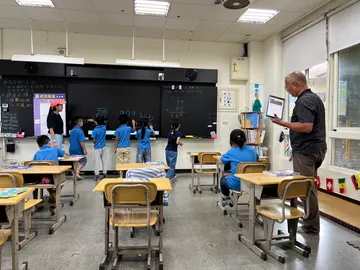
    Source image: How a rural Taiwanese first grader rebuilt his confidence that he could learnSource

    How a rural Taiwanese first grader rebuilt his confidence that he could learn

    Teach For Taiwan (TFT) published alumna Tsai Chi-pei’s recollection of her teaching. While serving in Gukeng Township, Yunlin County, she observed that a first grader, Xiao-yu, often said “I can’t” after comparing himself with his older sister and drawing on earlier classroom experiences. The teacher began using manipulatives, stories and games to help him learn to tell time, and noticed that he later became more willing to ask questions and practise. This is one teacher’s retrospective account of an individual child. Changes in achievement cannot be attributed to any single teaching method, and the account does not represent all students in rural areas.

    Why read: A concrete account of how a teacher responds when a student doubts her own ability in a rural classroom. It can support discussion of teacher–student relationships, psychological safety around mistakes and everyday remedial teaching.