Skip to content
Interface language
6 OctTue
  1. World Bank
    InternationalResearch

    Topic illustration of education researchers examining charts and notesIllustration

    World Bank Uses Implementation Science to Track Education Reform, Distinguishing Reach from Learning Outcomes

    The World Bank describes a remedial-teaching model piloted in 400 Rwandan schools, along with related baseline and midline surveys, and notes that learning outcomes still require future evaluation. A separate teacher-training project has reached many schools, but the number reached cannot substitute for improvements in student skills.

    Why read: Clearly illustrates the distinction between evidence about implementation and evidence about outcomes.
29 SeptTue
  1. OECD
    InternationalResearch
    Topic illustration of education researchers examining charts and notesIllustration

    OECD Education at a Glance Focuses on Teacher Shortages: Cross-National Averages Need to Be Read in Context

    The OECD's 2026 Education at a Glance highlights teacher shortages, reporting that about 9.1% of primary and secondary teachers in the sampled countries were not fully qualified. The indicator is comparable across countries, but national definitions, missing values, and reference years differ; the average cannot be used directly to assess a particular country's schools.

    Why read: A foundational data entry point for comparing education systems internationally.

10 SeptThu
  1. UNICEF
    InternationalResearch
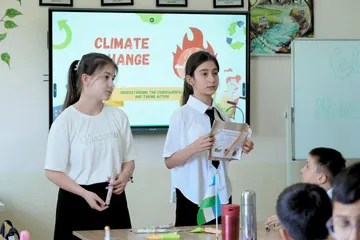
    Source image: UNICEF Estimates Climate Disasters Disrupted Learning for More Than 171 Million Students in 2025Source

    UNICEF Estimates Climate Disasters Disrupted Learning for More Than 171 Million Students in 2025

    In an analysis published in September 2026, UNICEF estimated that climate disasters disrupted the education of more than 171 million students worldwide in 2025. This is a retrospective estimate, not a count of disruptions that have already occurred in 2026; the numbers affected by different disasters cannot simply be added together.

    Why read: Climate risk is an important global issue for continuity of education.

19 JanMon
  1. OECD
    InternationalResearch
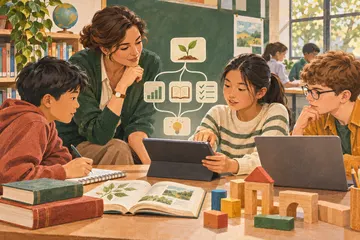
    Topic illustration of a teacher and students learning with digital tools and booksIllustration

    OECD Digital Education Outlook: better assignment performance with generative AI does not necessarily mean learning

    The OECD’s 2026 Digital Education Outlook discusses the use of generative AI in teaching, learning and governance. It cautions that when a task is handed directly to AI, assignment performance may improve without a corresponding gain in learning. The report offers policy and research recommendations; it does not mean every tool has been evaluated for causal effects.

    Why read: Offers international evidence and a clear distinction between performance and learning for discussions of AI in classrooms.