
Skip to content
Interface language
28 OctWed
  1. China Youth Daily Education
    ChinaCommentary
    Topic illustration of a teacher and students learning with digital tools and booksIllustration

    A Ninth-Grade Student Refuses to Go to School After a Phone Conflict: A Counseling Case on Negotiating Parent–Child Rules

    China Youth Daily published a counseling narrative by school counselor Zhong Tingting: a ninth-grade student temporarily refused to attend school after the father smashed the student's phone; the mother worried about phone use and high-school entrance exams; and the counselor separately listened to the mother and child before suggesting that they agree on rules together. The author explicitly says the problem remained unresolved when they left the counseling room. The article can support discussion of adolescent autonomy and family communication, but it is a single case, not a study of the effectiveness of an intervention on phone use. The text's claim that the prefrontal cortex matures at around age 23 is not accompanied by a research source, and is not treated here as a scientific conclusion.

    Why read: First published in print, the account presents a school counselor's case narrative and the different ways a mother and child understood their conflict. It retains the unresolved ending, reminding readers that rules set by parents and children's need for autonomy require ongoing negotiation; it does not generalize the counseling advice as a universally effective approach.
26 AugWed
  1. Teach For Taiwan
    ChinaCommentary
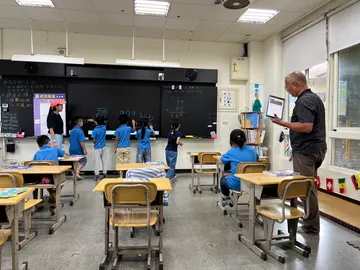
    Source image: How a rural Taiwanese first grader rebuilt his confidence that he could learnSource

    How a rural Taiwanese first grader rebuilt his confidence that he could learn

    Teach For Taiwan (TFT) published alumna Tsai Chi-pei’s recollection of her teaching. While serving in Gukeng Township, Yunlin County, she observed that a first grader, Xiao-yu, often said “I can’t” after comparing himself with his older sister and drawing on earlier classroom experiences. The teacher began using manipulatives, stories and games to help him learn to tell time, and noticed that he later became more willing to ask questions and practise. This is one teacher’s retrospective account of an individual child. Changes in achievement cannot be attributed to any single teaching method, and the account does not represent all students in rural areas.

    Why read: A concrete account of how a teacher responds when a student doubts her own ability in a rural classroom. It can support discussion of teacher–student relationships, psychological safety around mistakes and everyday remedial teaching.