Skip to content
Interface language
  1. Cult of Pedagogy
    InternationalGuide
    Source image: Bringing whole books back into the classroom: how teachers can make room for sustained readingSource

    Bringing whole books back into the classroom: how teachers can make room for sustained reading

    Jennifer Gonzalez begins with memories of her secondary English classroom, describing shared reading of a first chapter, modelling comprehension and discussing relationships between characters. She then cites literacy educator Jennifer Serravallo's suggestions for fitting whole books between units, into subject themes, small-group reading or summer courses. The article also mentions a 2019 study, but its original paper was not obtained in this review. The reported months of progress cannot be treated as an effect independently verified by this website.

    Why read: Teachers can examine whether timetables provide sustained time for complete works and use shared reading and vocabulary scaffolds to lower the initial barriers to longer texts.


  1. Wonkhe
    InternationalCommentary
    Topic illustration of a school counselor listening to a studentIllustration

    234 invited, only 16 replies: who is missing from a student-belonging survey?

    A student-success adviser at a UK university reflects on a belonging survey: 16 of 234 invited students responded, approximately 6.84%. Rather than describing the 218 non-respondents as alienated, the author raises possible explanations such as work, caring responsibilities, commuting or mistrust that would need interviews to investigate, and argues for sustained conversations alongside questionnaires.

    Why read: The reflection encourages student-support teams to address non-response bias and design interviews or diary methods that can hear from students who remain silent.

  1. The Hechinger Report
    InternationalResearchPreprint · not peer reviewed
    Source image: Why Did Two AI Studies Find a Positive Association in One Case and a Negative Trial Effect in the Other?Source

    Why Did Two AI Studies Find a Positive Association in One Case and a Negative Trial Effect in the Other?

    A reporter juxtaposes two October working papers involving the same researcher: use of a middle-school math platform in Arizona was positively associated with MAP scores, while a university randomized students by instructor to receive a course AI assistant and found lower grades and engagement with the learning platform. The tools, educational levels, and comparison methods differ, so the findings cannot directly cancel each other out or be generalized as a single overall effect of AI.

    Why read: Use the contrasting results to practice reading research: first distinguish an association with use from randomized assignment, then examine implementation conditions, engagement, and outcome measures.

  1. Edutopia
    InternationalGuide
    Source image: Making Thinking Visible in Common Classroom Activities: Five Small ChangesSource

    Making Thinking Visible in Common Classroom Activities: Five Small Changes

    Edutopia offers five classroom designs: require claims and evidence in peer discussions; pause videos for students to produce explanations; have students answer individually before and after group discussion; use closed-notes retrieval; and use an exit ticket where students answer, rate their confidence, and then revise. The author cites several studies to support some of the mechanisms, but the original papers were not checked individually in this round, so this is presented here only as teaching advice.

    Why read: A supplementary methods read of an earlier draft. The ideas may help turn apparent student engagement into observable explanation, retrieval, and revision, and support a small trial chosen for a particular subject-area task.

  1. Education Endowment Foundation
    InternationalResearch
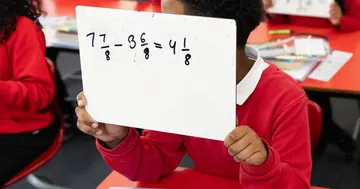
    Source image: Large-Scale UK Trial: Mathematics Reasoning Program Yields an Average Gain Equivalent to About One MonthSource

    Large-Scale UK Trial: Mathematics Reasoning Program Yields an Average Gain Equivalent to About One Month

    EEF reports a randomized trial involving 6,291 Year 2 pupils in 238 schools. On average, the mathematics reasoning program group made progress equivalent to about one month more than the usual-teaching group. The “month” is an EEF equivalence metric; it does not mean each student actually received one additional month of instruction.

    Why read: A classroom intervention trial with an independent evaluation and a relatively large sample.

You have reached the end