Skip to content
Interface language
  1. Cult of Pedagogy
    InternationalGuide
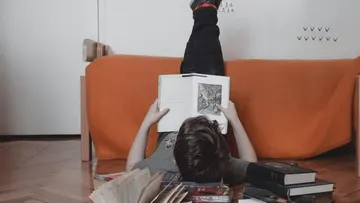
    Source image: Bringing whole books back into the classroom: how teachers can make room for sustained readingSource

    Bringing whole books back into the classroom: how teachers can make room for sustained reading

    Jennifer Gonzalez begins with memories of her secondary English classroom, describing shared reading of a first chapter, modelling comprehension and discussing relationships between characters. She then cites literacy educator Jennifer Serravallo's suggestions for fitting whole books between units, into subject themes, small-group reading or summer courses. The article also mentions a 2019 study, but its original paper was not obtained in this review. The reported months of progress cannot be treated as an effect independently verified by this website.

    Why read: Teachers can examine whether timetables provide sustained time for complete works and use shared reading and vocabulary scaffolds to lower the initial barriers to longer texts.
  1. K-12 Dive
    InternationalGuide
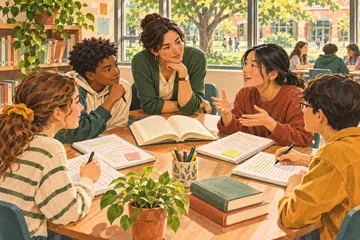
    Topic illustration of a teacher and students discussing books and ideasIllustration

    Say it before you write it: classroom approaches to oral rehearsal

    Interviews with writing educators describe asking pupils to speak their ideas, record and listen back, have a teacher write them down, and return to oral organisation part-way through writing. The interviewees stress that scaffolding should respond to pupils' actual needs; year group alone cannot determine the level of support.

    Why read: The article offers writing teachers a practical diagnostic sequence: distinguish a lack of ideas, a lack of language and difficulty getting words onto the page, then select conversational, peer or recording support.

  1. Edutopia
    InternationalGuide
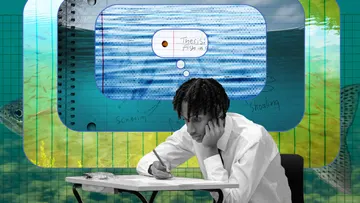
    Source image: Making Thinking Visible in Common Classroom Activities: Five Small ChangesSource

    Making Thinking Visible in Common Classroom Activities: Five Small Changes

    Edutopia offers five classroom designs: require claims and evidence in peer discussions; pause videos for students to produce explanations; have students answer individually before and after group discussion; use closed-notes retrieval; and use an exit ticket where students answer, rate their confidence, and then revise. The author cites several studies to support some of the mechanisms, but the original papers were not checked individually in this round, so this is presented here only as teaching advice.

    Why read: A supplementary methods read of an earlier draft. The ideas may help turn apparent student engagement into observable explanation, retrieval, and revision, and support a small trial chosen for a particular subject-area task.

You have reached the end