Skip to content
Interface language
  1. UNESCO
    InternationalResearch

    Topic illustration of education researchers examining charts and notesIllustration

    UN agencies report that more than half of Afghanistan's primary-school-age children are outside formal education

    A new UNESCO and UNICEF report says 53% of Afghanistan's primary-school-age children are outside formal general education and describes restrictions on girls' education and problems with learning quality. The material checked so far is the agencies' press release; the underlying survey methods still need to be checked against the full report.

    Why read: A major new report addressing both access to education and learning quality.
  1. Education Endowment Foundation
    InternationalResearch
    Source image: Large-Scale UK Trial: Mathematics Reasoning Program Yields an Average Gain Equivalent to About One MonthSource

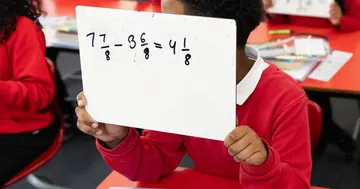
    Large-Scale UK Trial: Mathematics Reasoning Program Yields an Average Gain Equivalent to About One Month

    EEF reports a randomized trial involving 6,291 Year 2 pupils in 238 schools. On average, the mathematics reasoning program group made progress equivalent to about one month more than the usual-teaching group. The “month” is an EEF equivalence metric; it does not mean each student actually received one additional month of instruction.

    Why read: A classroom intervention trial with an independent evaluation and a relatively large sample.

  1. Education Endowment Foundation
    InternationalResearch
    Source image: Schools in England Report: Literacy and Attendance Are the Main Barriers for Disadvantaged PupilsSource

    Schools in England Report: Literacy and Attendance Are the Main Barriers for Disadvantaged Pupils

    An EEF-commissioned analysis of more than 1,200 Pupil Premium strategy statements from schools in England found that 91% mentioned literacy and English issues and 83% mentioned attendance. It reflects challenges identified by schools in their documents; it is not an independent measure of students' skills or absences.

    Why read: Shows how schools define problems and reminds readers to distinguish self-reports from outcomes.

  1. Ministry of Education of the People’s Republic of China
    ChinaUpdate
    Topic illustration of a teacher and students discussing books and ideasIllustration

    Science education’s Learning by Doing initiative calls for at least one inquiry task each semester

    The Ministry of Education introduced the action guidelines, which call for inquiry-based practice to be organized within existing instructional hours. Each student is to complete at least one task per semester, lasting no fewer than four class periods, with an emphasis on process-based assessment. The quality of implementation will still depend on teachers, resources and local arrangements.

    Why read: The guidelines specify the frequency and instructional time for classroom inquiry, making them useful alongside resources on implementation.

You have reached the end