Skip to content
Interface language
  1. NPR
    InternationalUpdate
    Topic illustration of a teacher and students discussing books and ideasIllustration

    NPR follows about a dozen special-education teachers: an ongoing school-year reporting project

    NPR explains an ongoing school-year reporting project in which about a dozen teachers share voice memos. Classroom visits involve privacy and permission. These are longitudinal accounts, not a representative survey.

    Why read: The project follows teachers’ working conditions while making its reporting method visible, inviting comparison with formal requirements and systematic data.

  2. NPR
    InternationalUpdate
    Topic illustration of a teacher and students discussing books and ideasIllustration

    One year of universal childcare in New Mexico: places and proposed copayments are separate questions

    NPR follows families experiencing lower costs alongside long waits for childcare. Proposed copayments for some higher-income households involve rulemaking and notice; they should not be described as already being charged on 16 November.

    Why read: Distinguishing eligibility, available places and the timing of fee rules helps readers assess whether a public service is accessible in practice.

  1. Chalkbeat
    InternationalUpdate
    Source image: New York schools still frequently call 911 during student crises: the gap between rules and supportSource

    New York schools still frequently call 911 during student crises: the gap between rules and support

    Citing New York City data, Chalkbeat reports that schools make more than 2,000 calls to 911 each year over students' emotional crises, and that calls involving children under 10 have exceeded 5,000 in total since 2016. The report uses a first-grader's experience to examine gaps in implementation and support, while also documenting the school's incident report and the education department's response.

    Why read: Citywide call trends, the rules and an individual case provide complementary layers of evidence for readers concerned with school crisis responses and special-education support. The different parties' accounts and the limits of second-hand reporting of the data must remain explicit.

  1. Higher Ed Dive
    InternationalUpdate
    Topic illustration of education researchers examining charts and notesIllustration

    International enrolment declines at US colleges: what pressures does a survey reveal?

    An online survey of 203 US higher-education institutions by NAFSA and its partners found that most responding institutions reported a decline in international postgraduate enrolment, while 45% reported lower undergraduate enrolment. These are institutional self-reports, not national student counts. Respondents' explanations alone cannot establish that federal policy caused the decline.

    Why read: The survey sample, policy pressures and changes at different degree levels are clearly identified. This provides a useful international higher-education story that distinguishes institutional self-reports, actual student numbers and causal explanations.

  1. Tes Magazine
    InternationalUpdate
    Source image: UK schools face growing pressure over sexual harassment, with training and resources central to their responseSource

    UK schools face growing pressure over sexual harassment, with training and resources central to their response

    A Tes investigation combines the Department for Education's school-leader survey with suspension records to examine the pressure schools face in responding to sexual harassment among pupils. Interviewees call for more training and support across agencies. Figures drawn from different survey periods and suspension records cannot simply be added together, and they do not show that every school has experienced an increase.

    Why read: This week's independent investigation examines practical gaps in pupil safety and schools' responsibilities.

  2. The 74
    InternationalUpdate
    Source image: US local votes back dedicated early-childhood funding; final results and implementation still need follow-upSource

    US local votes back dedicated early-childhood funding; final results and implementation still need follow-up

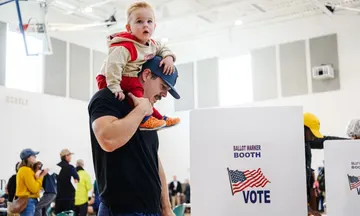
    The 74 reviews votes on dedicated early-childhood funding: as of 6 November, nine of 12 measures had passed, one had failed and two remained undecided. An update on 10 November still noted that some ballots had not been counted. Voter support does not mean funding has been disbursed, still less that children's learning has improved.

    Why read: Distinguishing support for fundraising, actual allocations and service improvements makes it possible to follow whether stable funding changes access to early-childhood provision.

  3. K-12 Dive
    InternationalUpdate
    Topic illustration of a school counselor listening to a studentIllustration

    US school civil-rights data: how discipline and access to courses are distributed

    K-12 Dive examines US school civil-rights data for the 2023–24 school year: Black boys represented 7% of K–12 enrolment but 18% of pupils receiving in-school suspensions. Pupils receiving disability-related services were also overrepresented in some disciplinary statistics. The report also covers restraint, seclusion and course availability. Its English-learner subheading says 'increase', while the body gives a change from 12% to 11%; no trend conclusion is adopted on this point.

    Why read: The report invites readers to compare a group's share of enrolment with its share of a particular disciplinary measure, while distinguishing the survey year, publication date and statistical definitions.

  1. FE Week
    InternationalUpdate
    Topic illustration of a teacher and students discussing books and ideasIllustration

    UK apprenticeship-funding investigation: almost £200,000 is still being recovered

    FE Week follows a funding-claims investigation into a former apprenticeship provider. The government's two-page findings confirm that employment status could not be evidenced for the full duration of some apprenticeships, identify examples of non-compliant off-the-job training records, and say that some English and maths qualifications already obtained at other providers were claimed again. The department identified £198,920.10 in overpayments and is taking recovery steps; the provider says it has changed its procedures.

    Why read: The investigation grounds discussion of training quality in employment checks, training records and eligibility for funding, without generalising one provider's breaches to the entire system.

You have reached the end